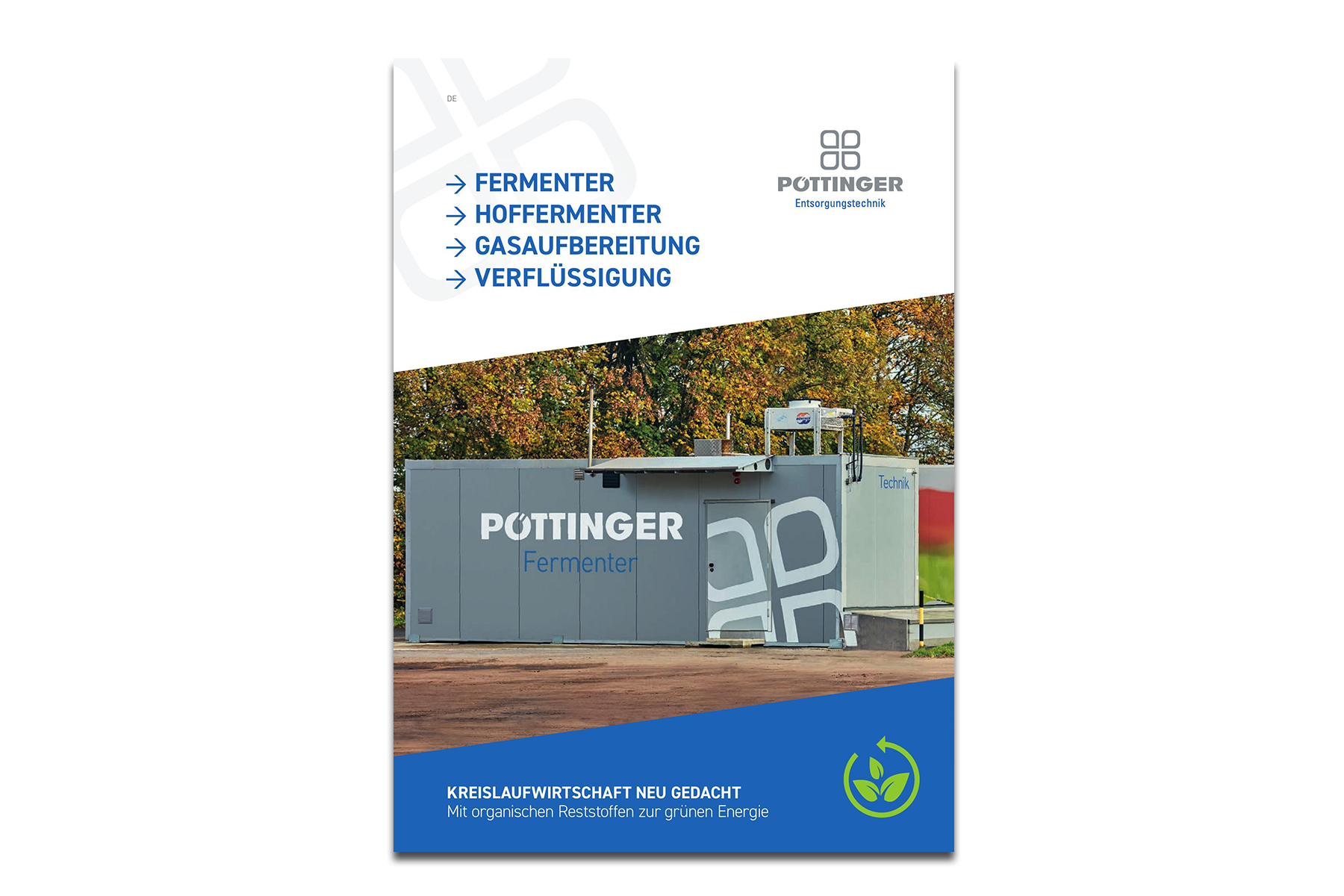
PÖTTINGER Fermenter

A fresh approach to the circular economy

The PÖTTINGER fermenter embodies a modern and nature-based circular economy. Organic waste is not disposed of, but utilised as a valuable resource. In a closed-loop process, it is converted into CO₂-neutral biogas and high-quality digestate, which can be returned to the soil as humus fertiliser. In this way, the system combines renewable energy production with sustainable humus formation.

The Fermenter Principle

In the PÖTTINGER fermenter, biogenic residues are fermented under controlled conditions. This process produces methane, which can be used in a variety of ways as a renewable energy source.

The biogas produced can be converted directly into electricity and heat, or processed into biomethane of natural gas quality. It also plays an important role on the path to CO₂ neutrality as a sustainable fuel in the form of bio-CNG or bio-LNG.

Once the fermentation process is complete, a nutrient-rich digestate remains. This can easily be processed into high-quality compost or applied directly as organic fertiliser. This return of organic matter promotes humus formation and, in the long term, restores the soil to its role as a natural CO₂ sink.

The PÖTTINGER fermenter thus closes the material cycle in a way that is both environmentally friendly and economically viable.

Fermenteranlage Ungarn_3

Method: Dry fermentation

Advantages of dry fermentation

Biogas production in the PÖTTINGER fermenter is based on the principle of batch dry digestion in the absence of oxygen. In contrast to conventional wet digestion, this process is particularly suitable for dry, fibrous or impurity-laden input materials such as bio-waste or landscape maintenance material.

As no additional agitators or pumping equipment are required, the process remains technically simple, robust and low-maintenance. At the same time, significantly less water is required, making operation particularly efficient. The storage and further utilisation of the digestate is also considerably easier due to its high dry matter content.

Our system: modular, flexible, scalable

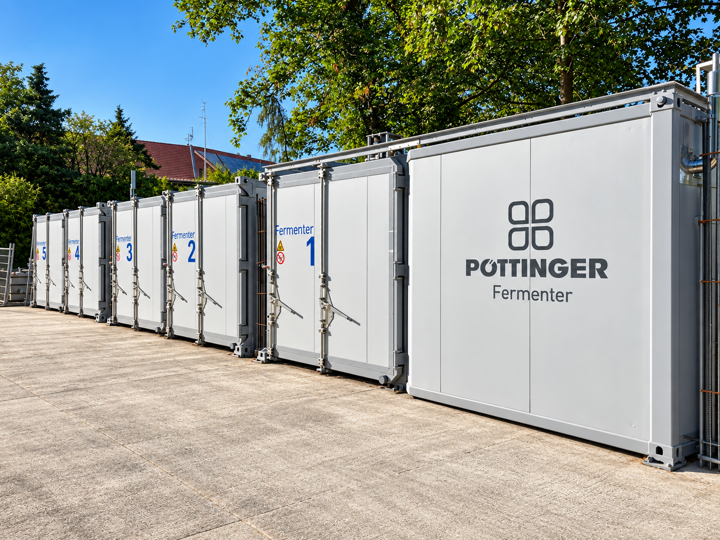
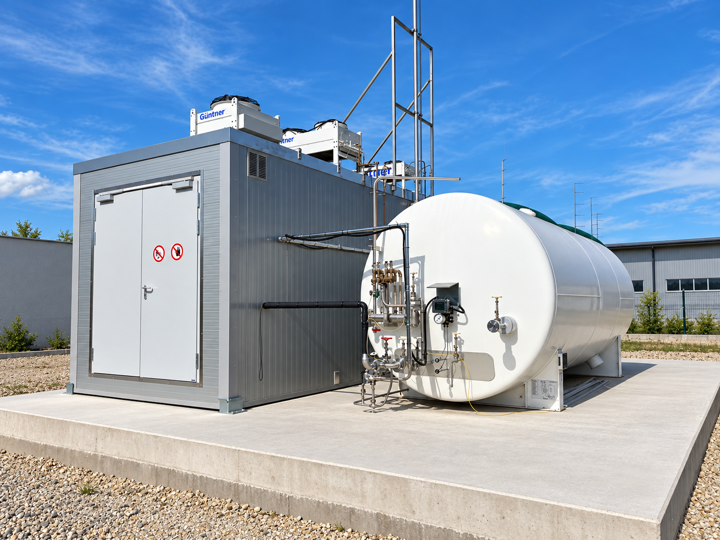
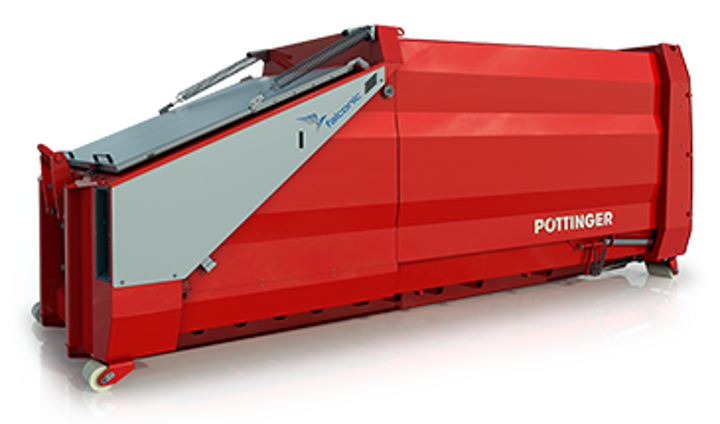
The PÖTTINGER fermenter is designed as a container-based, flexibly scalable system. The plant consists of a technical container with an integrated control unit and gas storage, as well as at least three fermenter boxes.

Depending on requirements, the system can be expanded in a modular fashion to up to 16 fermenters. This allows the plant to be optimally adapted to individual annual capacities and to grow in line with operational requirements. Capacity starts from around 1,300 tonnes per year.

A closed system for low-odour operation

The closed-system design enables low-odour operation, which is a decisive advantage, particularly when handling sensitive input materials. At the same time, the system embodies PÖTTINGER’s renowned quality and ensures perfectly coordinated interaction between all components. The standard fermenter also impresses technically with its clear and compact dimensions.

Compact dimensions and efficient use of space

A single fermenter container has external dimensions of approximately 8 × 3 × 3 metres and can hold around 30 tonnes of material. The process cycle per fermenter is approximately three weeks.

A basic plant comprising three fermenters, a technical container and a handling area requires a footprint of around 500 square metres. This means the system can be implemented in a way that is both efficient and space-saving.

Input & Output

The PÖTTINGER digester processes organic waste such as grass clippings, garden cuttings, biowaste and plant-based residues from the agricultural and food industries. Upon delivery, these materials are fed into the digester chambers and fermented over a period of several weeks.

This process yields two valuable end products: biogas, a renewable energy source for heat, electricity or fuel, and a stable digestate, which is further processed into raw compost and contributes to soil fertility. In this way, organic waste is transformed into sustainable added value for energy supply and agriculture.

Humus & Compost

A key component of the PÖTTINGER digester system is not only biogas production, but also the sustainable reuse of the remaining digestate. Once the fermentation process is complete, a nutrient-rich organic material remains, which can be further processed into high-quality compost through a secondary decomposition stage. This produces a valuable humus-based fertiliser that is returned directly to the natural nutrient cycle.

CO₂ savings

  • 280,053
    tonnes of CO₂ saved

References

Wiener Neustadt: Turning organic waste into energy

In Wiener Neustadt, around 7,500 tonnes of organic waste are processed each year using a PÖTTINGER dry fermentation plant. This process produces raw compost, electricity and heat – contributing to a sustainable material and energy cycle.

Find out more
Fermenteranlage Ungarn_3

Gödöllö fermenter plant

At MATE in Gödöllő, Hungary, the PÖTTINGER fermenter system demonstrates how organic residual materials from agriculture, green waste and campus operations can be put to good use. This creates a regional material and energy cycle while also serving as a research, training and demonstration facility.

Find out more

PÖTTINGER Fermenter

This climate-friendly technology transforms organic waste into valuable resources and enables an ecologically and economically sustainable circular economy.

Further solutions

PÖTTINGER Gas Processing

Upgrading of raw biogas for use as biofuel and injection into the natural gas grid

Gas Processing
Bürokauffrau im Büro

Do you have questions or would you like a personal consultation?

Please get in touch – we’ll be happy to offer you personalised, expert advice.
Please accept our privacy policy
An error has occurred. Please try again later.

Thank you for your enquiry.

We will be in touch with you shortly.