
Gödöllö: Turning biowaste into energy and knowledge
The initial situation
The Hungarian University of Agriculture and Life Sciences (MATE) is pursuing its “MATE 2030” strategy with the aim of embedding sustainability and the circular economy more strongly in teaching, research and practical applications. At the Szent István Campus in Gödöllő, biodegradable waste is collected separately and recovered.
This includes biowaste from student residences, green waste from campus maintenance, animal manure and other organic by-products from horticulture.
The challenge
The various organic material streams were not only to be treated properly, but also integrated as fully as possible into a regional material and energy cycle.
At the same time, the project was intended to serve not only for energy recovery but also as a demonstration, research and training facility. In this way, the plant combines practical waste recovery with knowledge transfer and applied research.
The solution
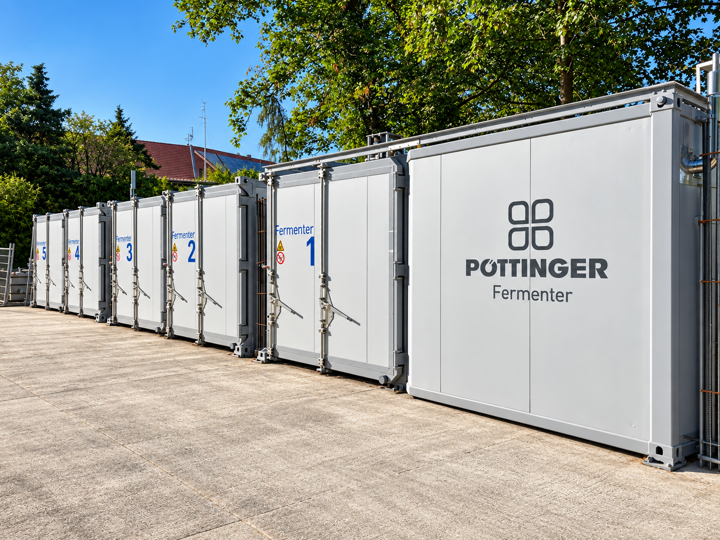
A modular dry fermentation plant with three fermenters was installed in Gödöllő. Each fermenter can process around 500 tonnes of biowaste and organic fertiliser per year, resulting in a total annual capacity of approximately 1,500 tonnes.
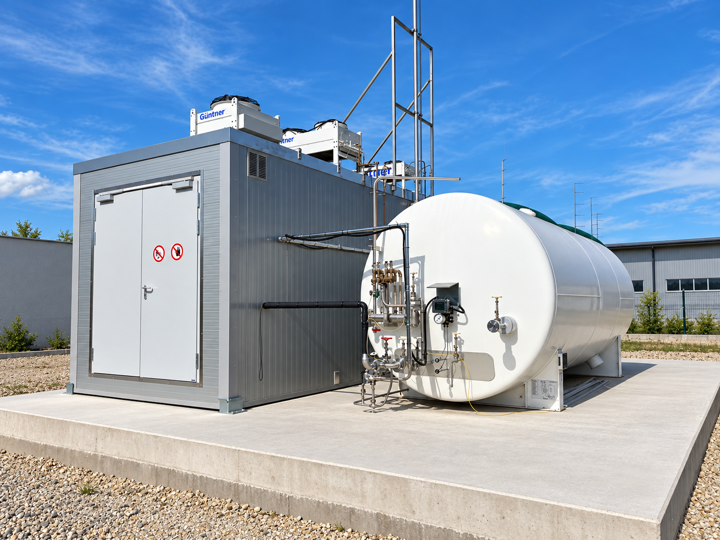
According to project data, around 100 m³ of biogas can be produced from one tonne of input material. In total, the three fermenters generate approximately 150,000 m³ of biogas per year, which is then analysed, stored and used to generate electricity and heat.
In addition to energy production, the process also produces compost, which can be used, for example, to improve soil quality in parks and gardens. At the same time, the plant serves students and specialists as a practical demonstration and research facility for sustainable biowaste recovery.
