
ART Reitsport: Turning horse manure into renewable energy
The initial situation
ART Reitsport in Pfeffenhausen specialises in training, riding and therapy while also pursuing a sustainable approach to the resources available on site. The utilisation of the horse manure produced played a particularly important role. The aim was not only to use the manure as fertiliser, but also to generate biogas as an energy source beforehand.
In doing so, the business wanted to take an important step towards operating a largely CO₂-neutral equestrian facility.
The challenge
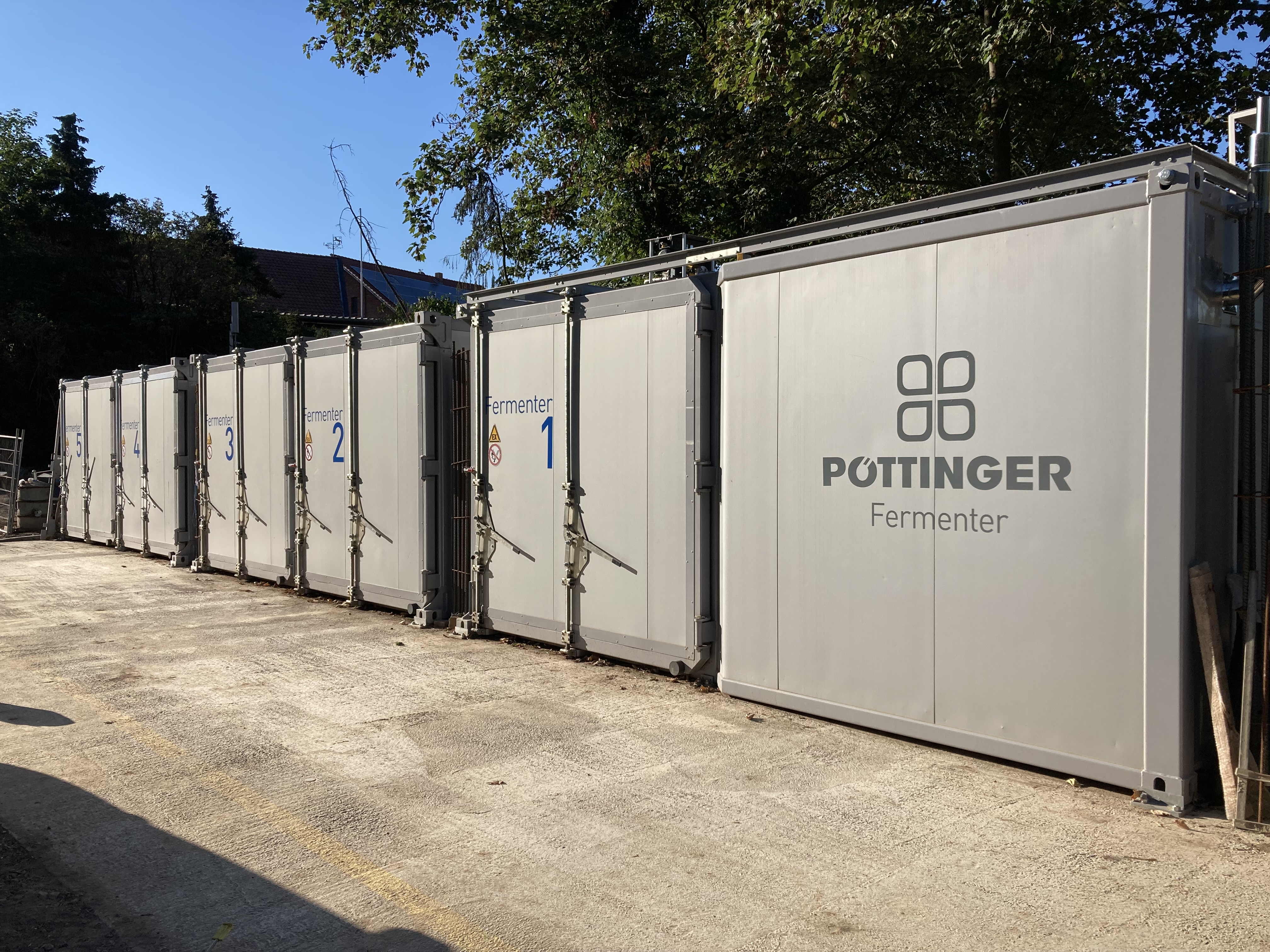
A solution was required that would allow the available horse manure to be used entirely as feedstock for a dry fermentation plant. At the same time, the existing oil heating system, which was almost 30 years old, was to be replaced and the energy generated used directly on site.
The fermentation process was also intended to produce both electricity and heat, while the remaining digestate could be reused as improved raw compost.
The solution
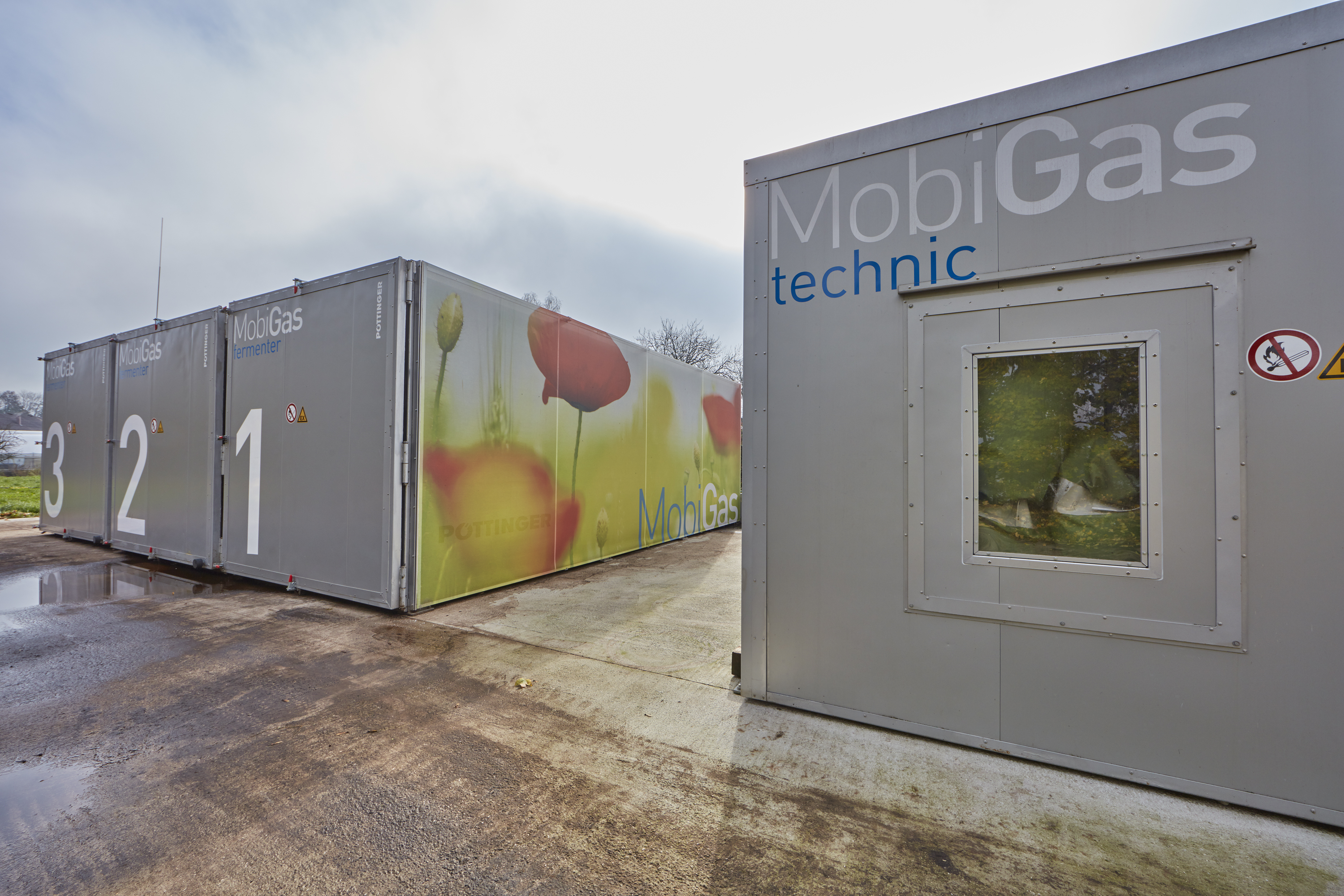
With the PÖTTINGER farm-scale fermenter, the available horse manure is used to produce biogas. The gas generated supplies a combined heat and power unit, which produces electricity for on-site consumption. The resulting waste heat is used 100% for heating and hot water – including for residential buildings, stables, the tack room and the indoor riding arena.
The system generates around 7 kW of electrical power and approximately 15 to 18 kW of thermal power per hour. With an annual operating time of around 8,600 hours, this corresponds to approximately 60,000 kWh of electricity and 130,000 kWh of heat per year.
The former oil heating system was completely removed and replaced with a heating concept based on the biogas produced. In addition, a biogas-compatible gas burner provides a redundant backup system, ensuring that the gas can still be used in the event of a fault with the combined heat and power unit.
